Why the Namoi Cannot Afford to Wait for the Coal Crash
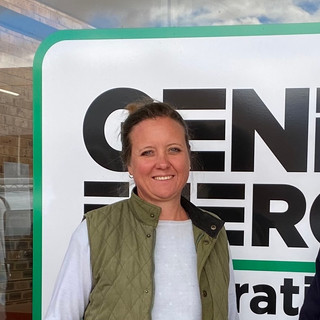
Last week I travelled to Sydney to meet with Members of Parliament while they were debating the Future Jobs and Investment Bill 2025. I was there with others from regional communities to ask for one simple but critical thing. Put local communities at the centre of the transition that is already reshaping our economy.

Right now, the future of the Namoi is being left to the volatility of international coal markets. That is not a transition plan. That is a gamble with our livelihoods.
A region carrying the load
The four coal regions of New South Wales generate billions of dollars in royalties for the state every year. Yet the transition fund currently on the table is just 25 million dollars per year across all four regions combined.
That is roughly one percent of the annual royalties those regions send to Macquarie Street.
✴️One percent.✴️
Our ask to government is modest. Lift that annual allocation to five percent of royalties. Even then, once it is divided between four regions, the Namoi would only be working with a relatively small pool of funding to reshape a regional economy that has relied on coal wages.
This is not about handouts. It is about reinvesting a fair share of the wealth that has been extracted from these regions into building their next chapter.
We have been here before
I previously served on the Northwest Panel under the Royalties for Rejuvenation program. Our job was to help direct funding into projects that could strengthen and diversify our regional economy.
That program has effectively been frozen for several years. Now it looks set to be replaced by the Future Jobs and Investment framework. The risk is that we lose more time in the changeover, while communities like ours are left without the long term planning and investment we urgently need.
Transition does not happen overnight. It takes years to design new industries, attract investment, train workers and build community confidence. Freezing programs and starting again under new names does not create certainty. It creates delay.
The approvals say 2045. The market might say otherwise
There are around 1,500 coal mine workers who live in our region, from Narrabri to Gunnedah and Quirindi. Many of the mines here currently have approvals that run to 2045. On paper, that makes it easy to push transition planning off to the future.

But approvals are not the same as guarantees.
Our local coal industry depends heavily on the export market. That means our jobs are tied to decisions made in boardrooms and parliaments on the other side of the world.
The mines in this region market both metallurgical coal for steelmaking and thermal coal for power generation.
Both of these coal types face growing uncertainty in international markets.
The global coal market is shifting
Research from Institute for Energy Economics and Financial Analysis shows that traditional markets for Australian thermal coal are weakening. Major buyers like Japan and South Korea are cutting coal use as they expand renewable energy and pursue net zero commitments. Even in parts of Asia where coal demand has been more resilient, growth is slowing and domestic supply is increasing.
Last financial year saw Whitehaven’s NSW revenue decline by 20% despite production only declining by 3% compared to the previous year.
IEEFA also highlights rising risks in the metallurgical coal market. While steelmaking still relies heavily on coking coal today, new technologies and recycling are reducing future demand growth. Global steel demand itself is expected to soften in key markets, and countries like India are actively working to diversify supply and reduce dependence on imported coal.
The key message is not that coal disappears tomorrow. It is that demand and prices can shift faster than regional communities can adapt.
If the international market turns sharply, production can fall quickly. Mines can scale back, automate or close earlier than their approvals suggest. When that happens, workers and towns bear the shock.
Germany did not wait for collapse
Germany has already been through a large scale coal transition. Over an 18 year period, it is spending hundreds of billions of dollars to support affected regions, workers and industries.
They did not wait until the last mine closed to start planning. They invested early, while coal was still operating, so that communities had time to build new economic foundations.

We should be asking ourselves a hard question. If our mines run to 2045 and we followed a similar timeframe, we should already be well into a serious, well funded transition effort.
Instead, we are discussing a fund that represents a tiny fraction of what our regions contribute each year and is a far cry short of what is needed.
The Hunter is a warning
Look to the Hunter Valley. Some mines there are already closing or winding down. The impacts are real. Workers are facing redundancy. Families are under pressure. Local businesses that depended on the mines are feeling the flow on effects.
Many people in the Hunter say transition planning should have started a decade earlier. We have the chance to learn from that experience. Or we can repeat it.
Planning is not giving up on coal
Talking about transition is not about shutting mines tomorrow. It is about managing risk.
It is about making sure that when global markets change, as they inevitably will, our region is not left scrambling. It is about giving young people a reason to stay, giving workers options, and making sure the wealth generated here leaves a lasting legacy.
The Namoi has the skills, the land, the sun, the wind and the community spirit to build a strong future. But we need a serious partnership with government, backed by serious funding, to plan that future properly.
Leaving it to the market is not a plan. It is a roll of the dice with our community’s future.


Comments